Thinking about going solar in Queensland? It’s a smart move, especially in a state that gets some of the highest levels of sunshine in Australia. For many homeowners, solar is one of the most effective ways to take control of rising electricity costs and reduce long-term energy bills.
But while the benefits are clear, there’s often some uncertainty around what actually happens between getting a quote and switching your system on for the first time. The solar installation process isn’t complicated, but it does involve a few important stages behind the scenes. In Queensland, this also includes specific requirements around grid connection, local energy provider approvals, and compliance with state and network standards.
From the initial site assessment and system design through to approvals, installation, and final connection, each step plays a role in ensuring your system is safe, compliant, and set up to perform efficiently.
This guide walks you through the entire residential solar installation journey, step by step, so you know exactly what to expect at each stage.
| Ready to get your solar assessment? Talk to the Rad NRG team today. We’ll size a system for your home, walk you through the full process, and handle the paperwork from start to finish. Get your free assessment at radnrg.com.au |
The Solar Installation Process at a Glance
| Step | What Happens | Typical Timeframe |
| 1. Site Assessment | Roof inspection, shading analysis, energy review | 1-2 days after enquiry |
| 2. System Design | Custom system sized to your home and usage | 1-3 days |
| 3. Approvals & Permits | Network distributor application, STCs, council permit if needed | 1-4 weeks |
| 4. Installation Day | Panels, racking, inverter, wiring | 1 day (most homes) |
| 5. Electrical Inspection | Certificate of Electrical Safety issued | 1-3 days after install |
| 6. Grid Connection | Meter upgrade or reconfiguration, system activated | 1-2 weeks |
| 7. Monitoring & Handover | App setup, feed-in tariff registration, system walkthrough | Same day as activation |
Step 1: Site Assessment
The solar installation process starts with an on-site assessment. This is where your installer visits your property to evaluate whether your home is a good fit for solar, and to gather the information needed to design the right system for you.
A thorough site assessment covers:
- Roof condition and structural integrity
- Roof orientation, pitch and available area
- Shading analysis (nearby trees, structures, chimneys)
- Your current electricity usage and daily consumption patterns
- The location and condition of your switchboard and meter
- Any site-specific considerations like heritage overlays or strata rules
The site assessment is your installer’s opportunity to understand your home, and your opportunity to ask questions. A good solar installer should come prepared with data and leave with enough information to design a system without guessing.
What Makes a Solar Accredited Installer Different?
Not all solar installers are the same, and when you’re investing in a system that’s expected to power your home for the next 20+ years, the difference really matters.
A Solar Accredited Installer (SAA) is a certified professional who has been formally trained and assessed to design and install photovoltaic (PV) systems according to strict Australian safety, quality, and performance standards. This accreditation is issued by Solar Accreditation Australia (SAA) and acts as a clear benchmark for professionalism in the solar industry.
- Designed and installed by qualified experts: SAA accredited professionals include both installers and designers who have proven solar installation expertise. Designers are responsible for creating an efficient, safe system tailored to your home, while installers ensure it is fitted correctly and performs as intended.
- Required for rebates and incentives: In Australia, SAA accreditation is essential for claiming Small-scale Technology Certificates (STCs), which help reduce the upfront cost of solar. In many cases, it’s also a requirement for accessing government rebates and energy incentives.
- Protection against poor workmanship: Working with non-accredited installers can lead to serious risks, poor system performance, safety issues, voided warranties, or even ineligibility for financial incentives. Accreditation helps protect you from cutting corners that could cost more in the long run.
- Confidence in long-term performance: A properly designed and installed system doesn’t just work on day one, it continues to perform efficiently for decades. Accreditation ensures your investment is built to deliver reliable energy savings and strong financial returns over time.
Step 2: Custom System Design
Once your site assessment is complete, the next step is designing a solar system specifically for your home. This is where your installation moves from general advice to a tailored plan built around your actual energy use, roof layout, and long-term goals.
There’s no standard system. A good design is based on what your home needs to perform efficiently and deliver the best return over time.
Your installer will determine:
- System size (kW) and number of panels based on your electricity usage
- Panel placement and orientation, with north-facing layouts typically producing the most energy in Australia
- Inverter type, including string inverters, microinverters, or optimisers depending on shading and roof design
- Battery options, whether to include one now or prepare the system for future battery storage
- Grid and switchboard integration, ensuring safe and compliant connection
You’ll then receive a detailed proposal showing the full system design, expected energy production, estimated bill savings, and payback period.
How Solar System Size Is Determined
System size (measured in kilowatts, or kW) is matched to your average daily energy consumption. As a guide:
| Daily Usage | Recommended System Size |
| Up to 15 kWh/day | 6.6 kW system |
| 15-25 kWh/day | 10-13 kW system |
| 25-40 kWh/day | 13-20 kW system |
| 40+ kWh/day | 20 kW+ or commercial-grade system |
These are guides, not rules. Your installer will factor in your feed-in tariff rate, the time of day you use the most electricity, any plans to add an EV charger or pool pump, and whether you want to include a solar battery in the design.
Steps 3 and 4: Approvals, Permits and Grid Connection Application
This is the part of the process most homeowners don’t see, but it’s an important step before your solar system can be installed and switched on. The good news is it all happens in the background, and your installer takes care of it for you.
Small-Scale Technology Certificates (STCs)
The federal solar rebate in Australia comes in the form of Small-scale Technology Certificates (STCs). These are created when your system is designed and registered by an accredited installer.
The number of STCs depends on your system size, location, and how long is left in the rebate scheme (which runs until 2030). In most cases, your installer or their agent claims these for you and applies the discount directly to your quote, so you don’t need to do anything.
💡For a typical Queensland home with a 6.6kW system, this can reduce the upfront cost by around $2,000 to $3,500.
Network Distributor Application (DNSP Approval)
Before your solar system can connect to the grid, your local network distributor, also called a Distributed Network Service Provider or DNSP, needs to approve the connection.
In regional Queensland, it’s Ergon Energy.
The application covers technical details about your system and how it will interact with the grid. Your installer submits this on your behalf. Approval generally takes one to four weeks, depending on current processing volumes and whether your property is close to the capacity limits for your local feeder.
Council Permits
Most residential solar installations in Queensland do not require a separate council permit. Standard rooftop solar panels are generally considered exempt development under Queensland planning rules.
Exceptions can apply if your property is in a heritage overlay area, if the installation changes the external appearance of a strata building, or if you’re installing a ground-mounted system. Your installer should flag any permit requirements upfront.
| What do you need to do during this phase? Very little. A reputable installer manages all the approvals on your behalf. You may need to sign an authority form allowing them to submit the DNSP application, and you’ll receive confirmation when approvals are granted. If a council permit is required, your installer will let you know. |
Step 5: Installation Day
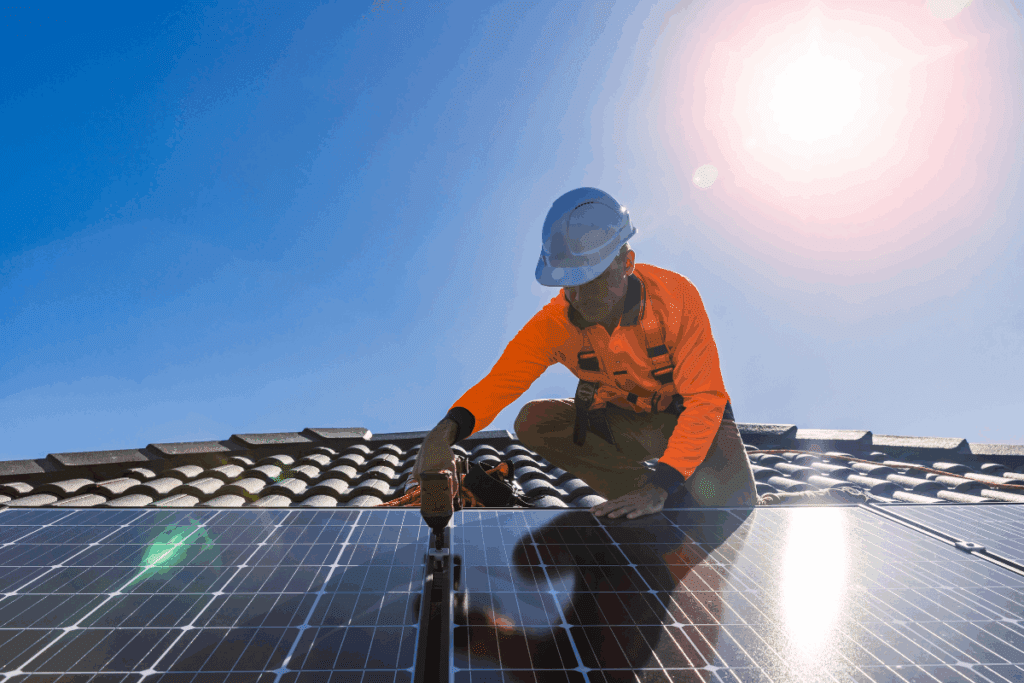
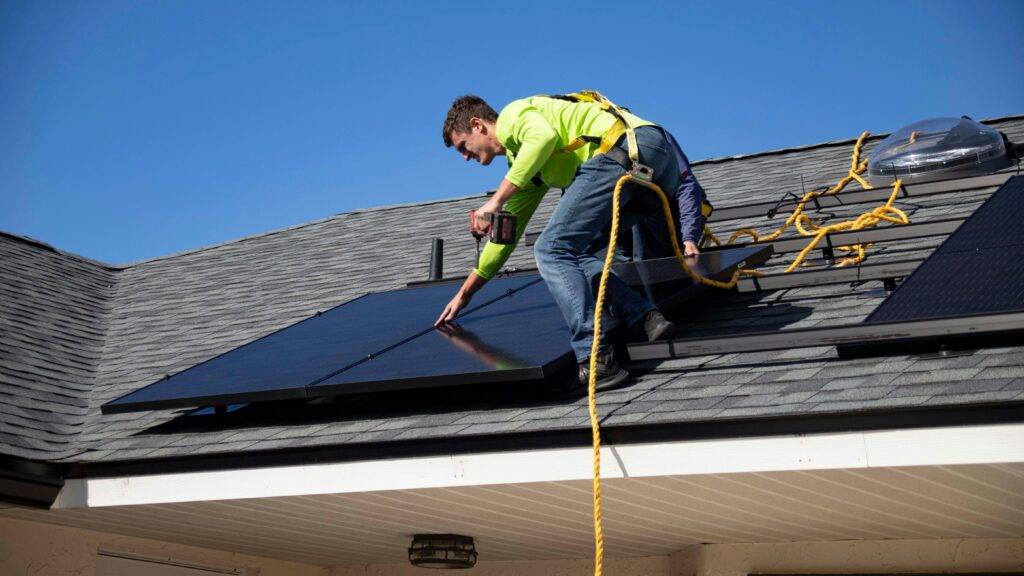
Installation day is the most visible part of the solar installation process, and for most homeowners, it’s surprisingly straightforward. A standard residential solar installation takes one full day for a crew of two to three people.
What the Crew Does on the Day
Here’s what happens during a typical residential solar panel installation:
- Install the roof mounting system using weatherproof fittings designed for your roof type
- Secure the solar panels onto the mounting rails according to the approved system design
- Run DC cabling from the panels down to the inverter location (often in the garage or along an external wall)
- Install the inverter in a suitable shaded area for performance and longevity
- Complete AC wiring from the inverter into your home’s switchboard
- Install or upgrade safety isolators where required for compliance
- Test the full system to ensure it is safe, compliant, and operating correctly
What to Expect as the Homeowner
You don’t need to prepare much, but there are a few simple things that help the day run smoothly:
- Be home (or have someone available) to provide access to the roof, switchboard, and relevant areas inside or outside the house
- Keep access to your garage or electrical meter box clear
- Allow space around the work areas so the installers can move safely and efficiently
At one point during the installation, your power will be switched off, usually for 30 to 90 minutes while the system is connected to your switchboard. Your installer will let you know in advance so you’re not caught off guard.
Once everything is installed, the team will walk you through the system. They’ll show you where key components are located, explain how the inverter works, and confirm that everything is operating correctly. The site should also be left clean and tidy before they leave.
Will the Installation Damage My Roof?
This is one of the most common questions we hear, and in short, no.
A properly installed solar system should not damage your roof. Reputable installers use roof-specific mounting hardware designed for the type of roof you have: tile, Colorbond, corrugated iron or flat. All penetrations are sealed and flashed correctly.
If you’re comparing installers, it’s worth asking what mounting system they use and confirming it’s compatible with your roof. Also, check that both workmanship and installation are covered under warranty for added peace of mind.
Step 6: Electrical Inspection and Grid Connection
Once your solar system is installed, it’s not immediately switched on. Before it can start generating and exporting power, two final steps need to happen: an electrical safety check and a grid connection upgrade.
This stage is mostly handled behind the scenes, but it’s essential for safety, compliance, and making sure your system can properly interact with the electricity grid.
- Certificate of Electrical Safety (CES): In Queensland, all electrical work must be certified by a licenced electrician. The installer’s electrician completes the Certificate of Electrical Safety on installation day. This document confirms that the wiring, isolators and switchboard connections meet Queensland electrical standards. The CES is lodged with the Electrical Safety Office and is a legal requirement. Keep a copy for your records. You’ll need it if you ever make a warranty claim or sell your home.
- Meter Upgrade and Grid Connection: To export solar power back to the grid and accurately measure your feed-in tariff, your existing electricity meter needs to be upgraded to a smart (interval or bi-directional) meter. This upgrade is arranged by your energy retailer or network provider. It usually takes one to two weeks after the electrical inspection is submitted. During this time, your system will still run, but it’s often set to “self-consumption only” or zero-export mode, meaning you use the solar power generated in your home until the meter upgrade is complete.
- Registering for a Feed-In Tariff: Once your meter is upgraded, you’ll need to notify your energy retailer to activate the feed-in tariff on your account. In Queensland, the current minimum feed-in tariff is set by the Queensland Competition Authority, but many retailers offer higher rates. It’s worth comparing retailer offers at this point to make sure you’re getting a competitive rate for the excess power you export.
Step 7: Monitoring, Maintenance and Getting the Most from Your System
The solar installation process doesn’t end when the system goes live. What you do after installation plays a big role in how much value you actually get from your solar over time. Fortunately, ongoing maintenance is minimal, but a little attention goes a long way.
Setting Up Solar Monitoring
Modern solar systems come with monitoring apps that show you exactly how your system is performing in real time. You can see how much power your panels are generating, how much your home is using, and how much energy is being exported back to the grid.
Your installer should set this up for you on installation day and show you how to use it. If not, it’s worth asking, this data is key to understanding your system and spotting issues early.
Solar Panel Maintenance: What’s Actually Needed
Solar panels are low-maintenance by design. They have no moving parts and are built to handle Australian weather conditions, including heat, rain, hail and UV exposure. That said, a small amount of routine care goes a long way.
- Rinse panels with water 2-4 times per year, or more often if you live near a dusty road, industrial area or under trees
- Keep an eye on your monitoring data. A drop in output that doesn’t match reduced sunlight is often the first sign of a dirty panel or a fault
- Schedule a professional system check every 5 years, or sooner if your monitoring alerts flag an issue
- Trim overhanging branches that could cause shading or physical damage
How to Maximise Your Solar Returns
The more solar power you use directly, the less you need to buy from the grid, and the faster your system pays for itself. Export rates are typically lower than the rate you pay for grid electricity, so self-consumption is more valuable than export.
Practical ways to increase self-consumption:
- Run high-consumption appliances (dishwasher, washing machine, pool pump) during daylight hours
- Use timer or smart controls to shift appliance use to solar hours automatically
- If you have or plan to add an EV, set it to charge during the day
- Consider adding a solar battery to store excess daytime generation for evening use
Is a Solar Battery Worth Adding?
A solar battery stores the excess power your panels generate during the day so you can use it at night, rather than exporting it to the grid for a lower rate. Whether it’s worth the additional investment depends on your usage patterns, the current feed-in tariff rate and your long-term energy goals.
Most modern systems are designed to be battery-ready, meaning you can add storage later without needing to redo your entire installation. If your system is planned correctly from the start, adding a battery in the future is simple and seamless.
💡See our full guide to solar batteries to understand how they work and whether one makes sense for your home.
Ready to Start Your Solar Installation Process?
Going solar is a big decision. But when each step is handled correctly, from system design and approvals through to installation and grid connection, the result is a system that is safe, compliant, and optimised for long-term performance.
The key is working with an experienced, accredited installer who understands how to design for your property, navigate network requirements, and ensure your system is set up to perform efficiently from day one. When that foundation is right, everything else follows a clear, predictable path.
If you’re considering solar, the best next step is a professional assessment. At Rad NRG, we take the time to understand your energy usage, inspect your site properly, and design a system that’s built for real-world performance.
If you want to know what a solar system will cost, what you’ll save, and how long it will take, talk to us today.